Copper House
A garden suite on a park for a familly to age in place.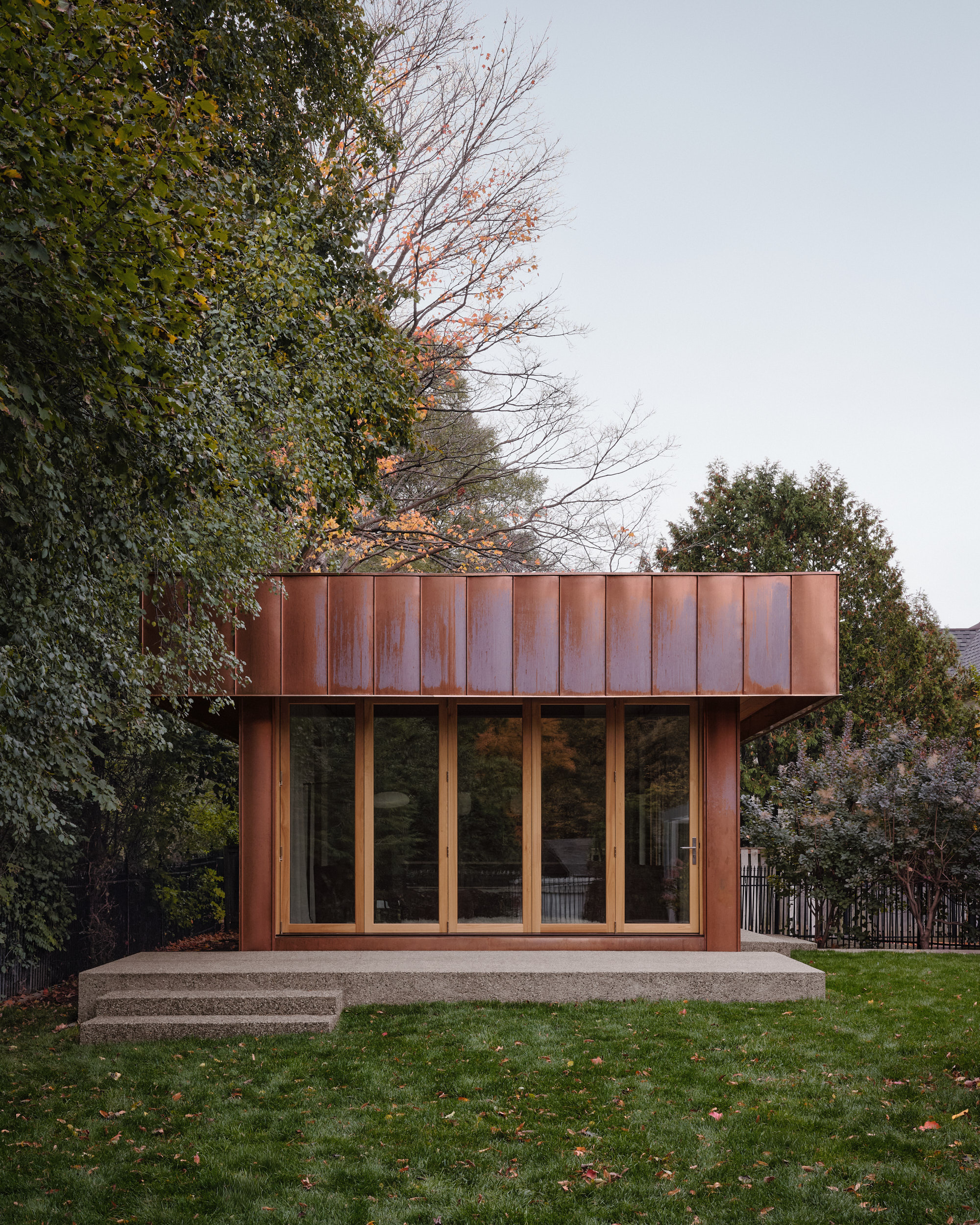



Location: Toronto, Ontario, Canada
Architect: François Abbott - Fabrication Studio
Photography: Alex Lesage
Construction: SevernWoods Fine Homes
Completion: 2025
Size: 60 m² [645 f²]
DESCRIPTION
On the edge of Sunnybrook Park, a quiet Toronto neighbourhood gives way to an expanse of ravine and trees. After two decades in the same family home, the client wanted to evolve within familiar surroundings — to create a place where their grown children and partners could stay close yet independent.
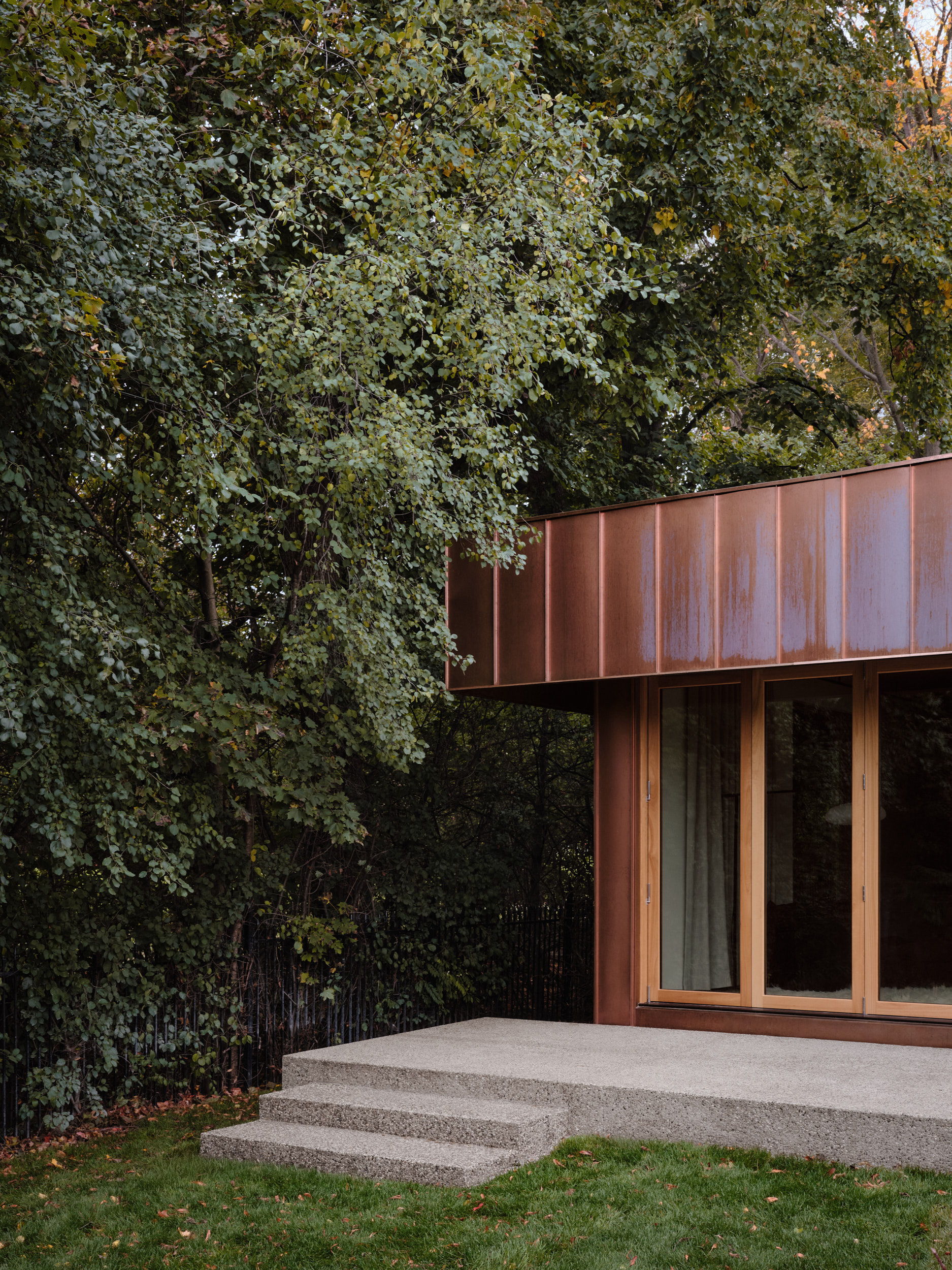
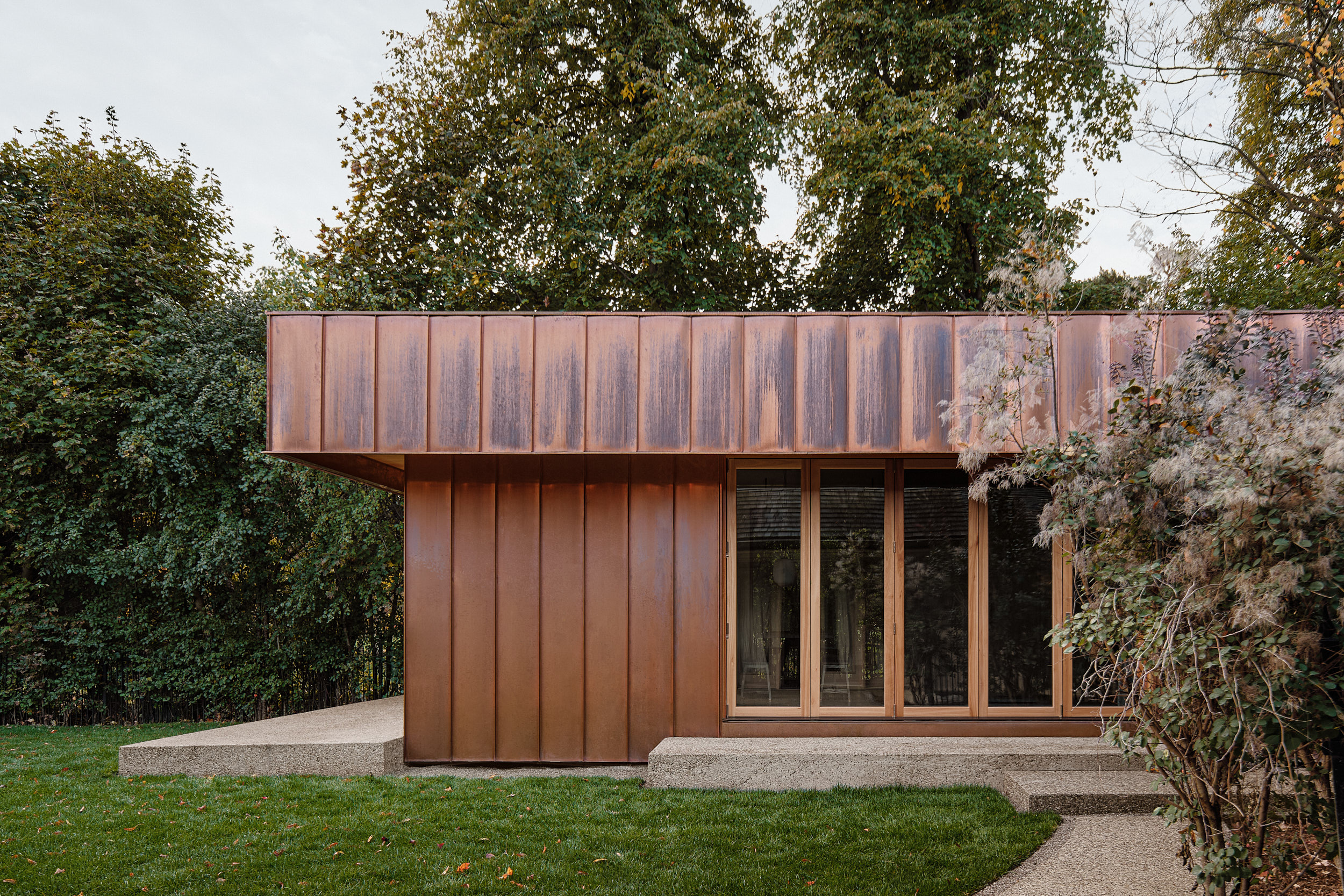
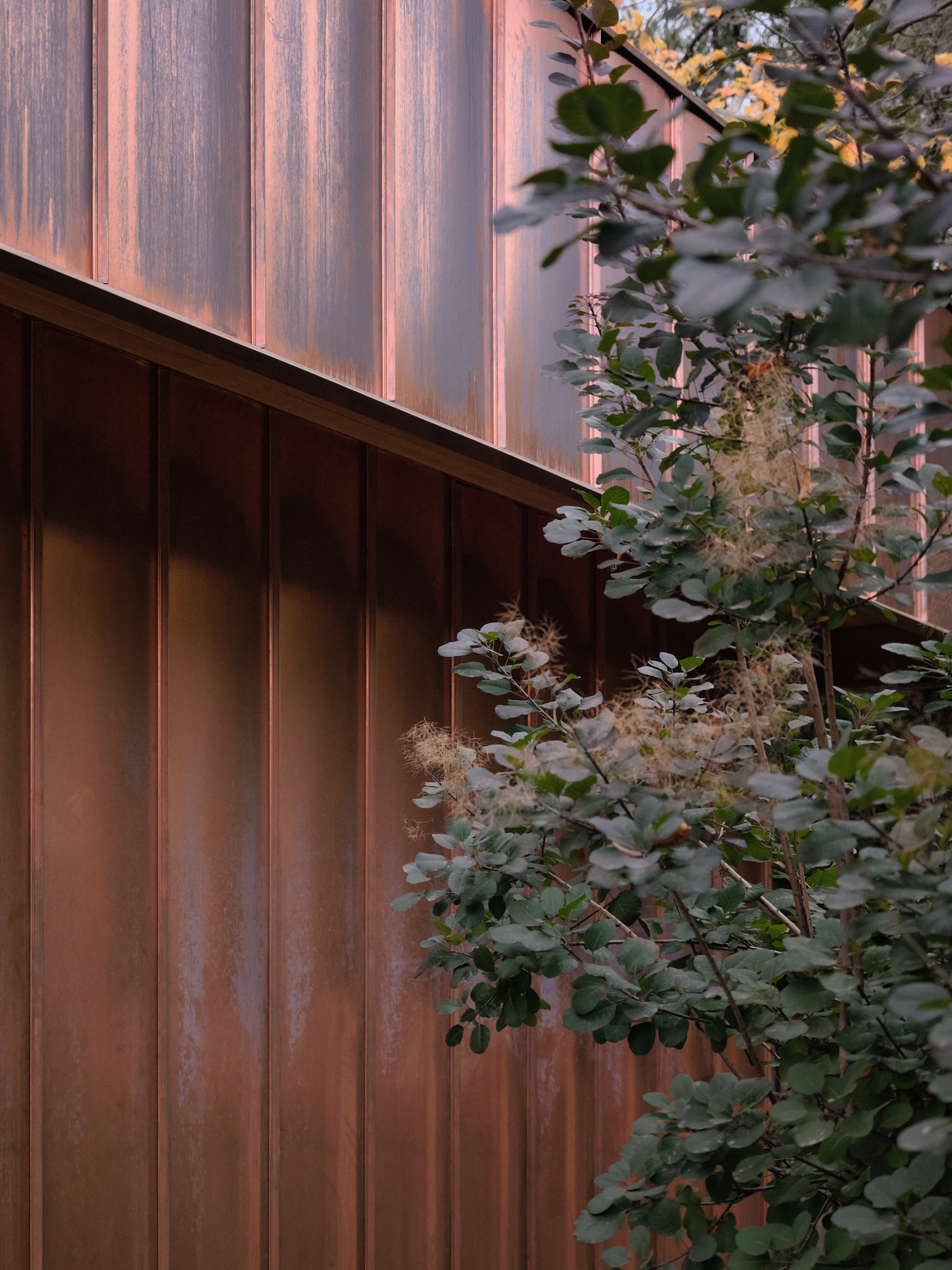
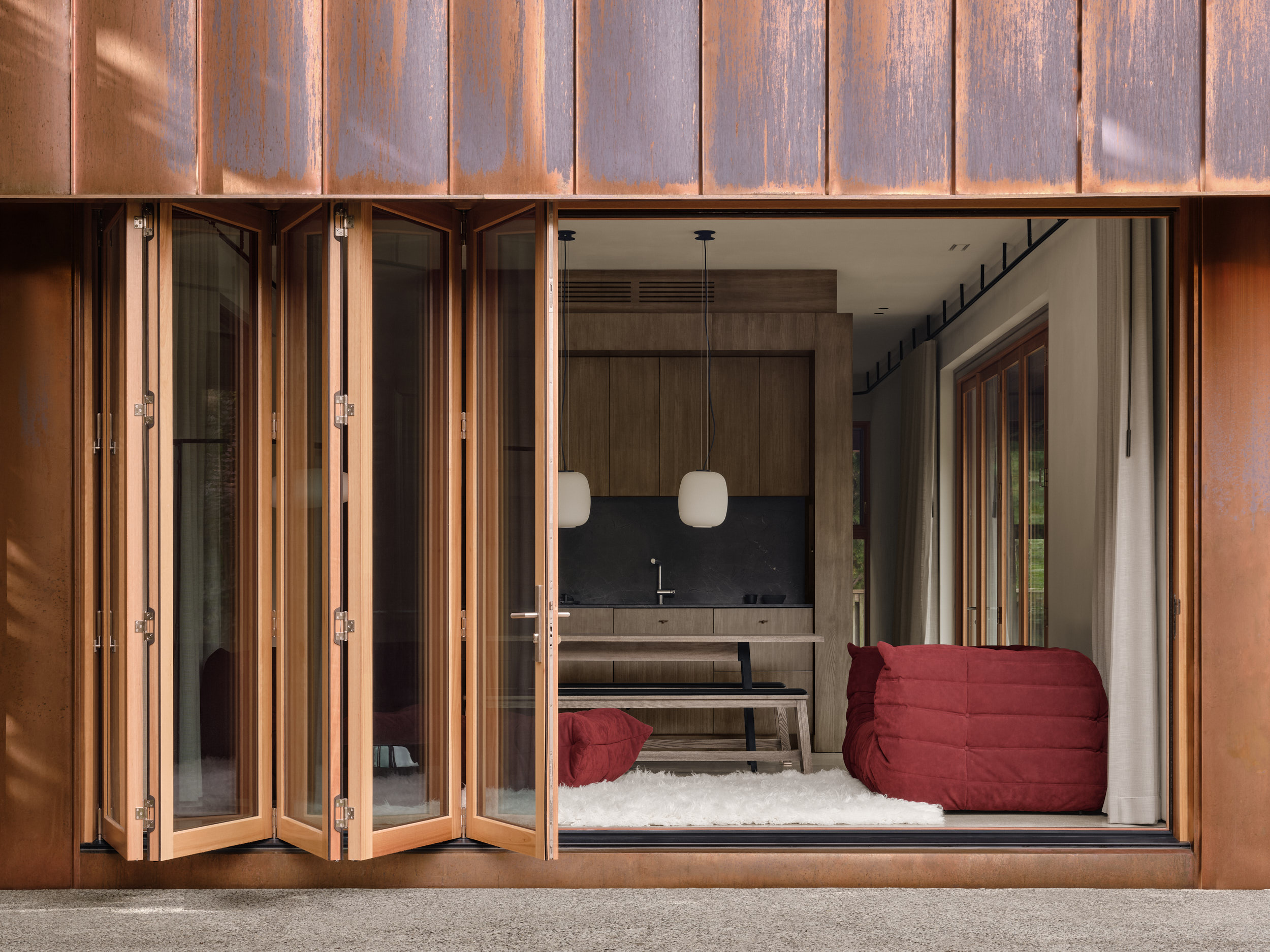
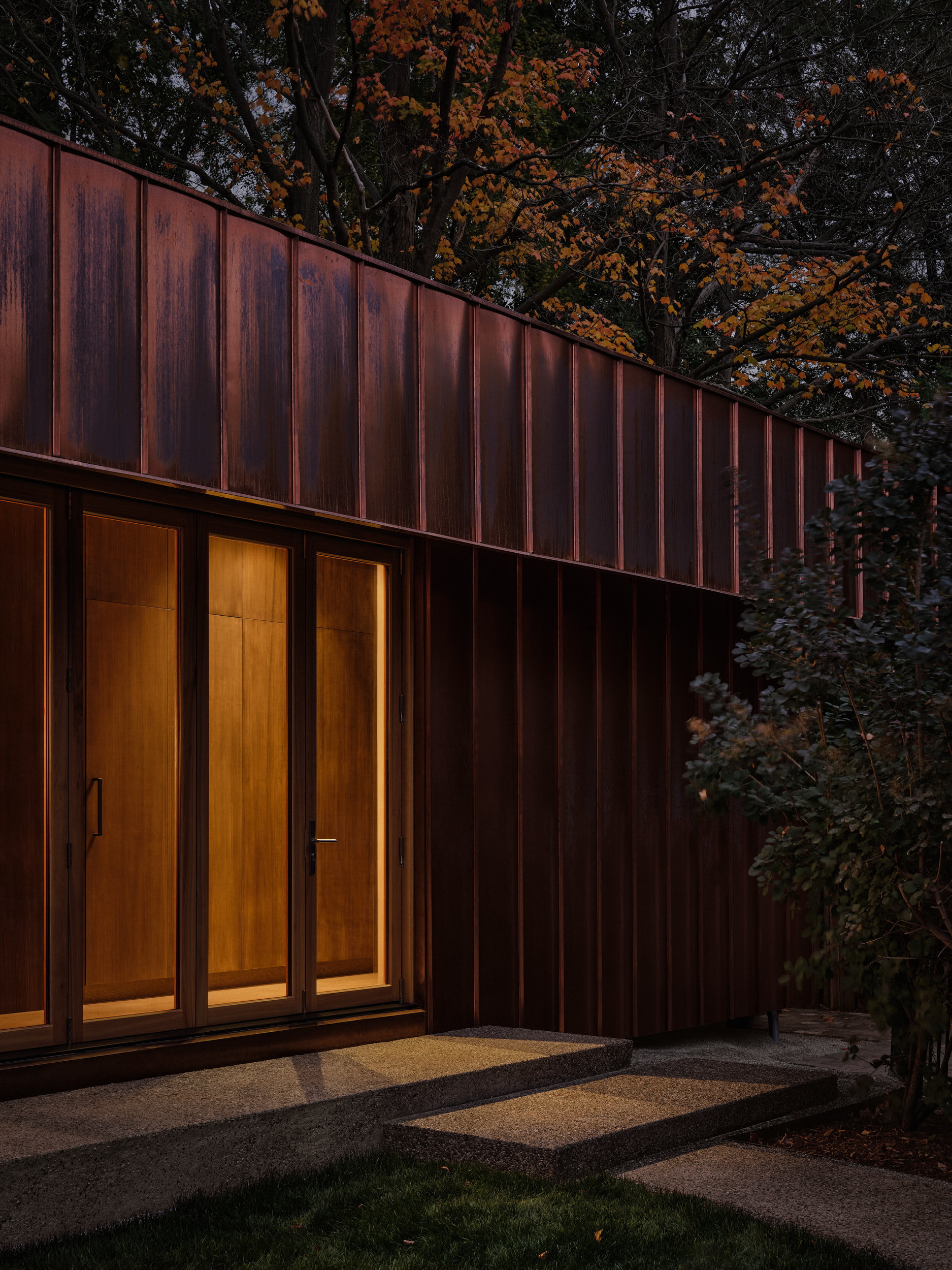
Copper House is a self-contained guest house that extends family life into the garden. Set against a screen of deciduous trees separating the private lot from the park beyond, the building is conceived to preserve this veil of greenery rather than compete with it. Copper became the natural choice — a material that begins bright and reflective, then softens through exposure to rain and sunlight, shifting through browns and muted greens. Over time, the façade is intended to register the same cycles as the landscape it inhabits.
To protect the trees’ root systems, the building avoids a traditional foundation. It rests instead on helical piles that lift it slightly above the ground, allowing air and water to circulate freely below. The raised base draws the underside into shadow, giving the volume a sense of lightness.
That shadow is echoed above by deep roof overhangs that shelter the walls from snow and sun. This separation from both ground and sky allowed the use of wood for the openings, completing a restrained, two-material palette. Both copper and wood will weather together — their most interesting expressions still to come.
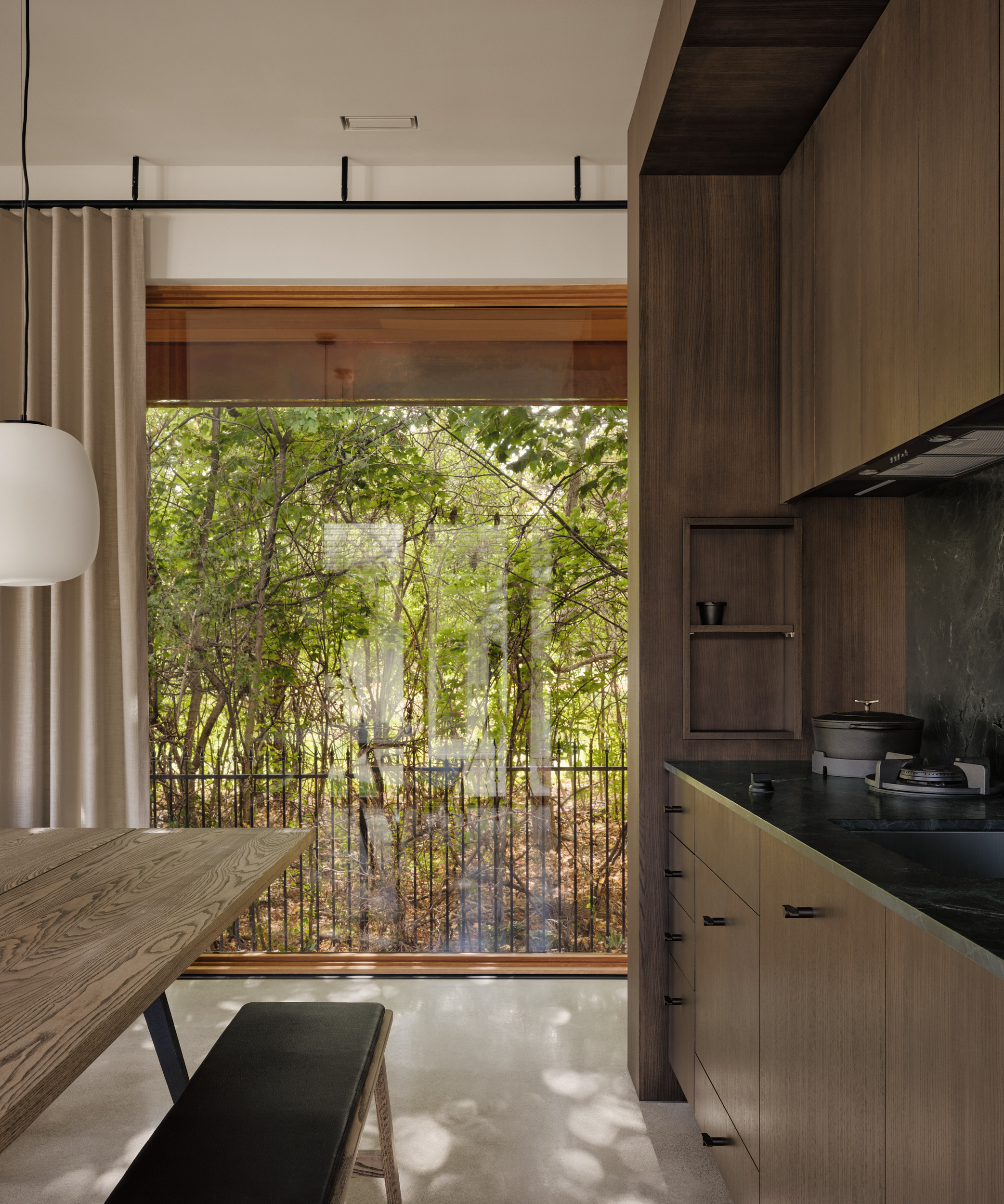
Each façade has a single, deliberate opening. The garden-facing walls slide open entirely, turning the interior into a covered terrace. The more private rooms use deep frames to focus views of vegetation and capture the play of light and shadow.
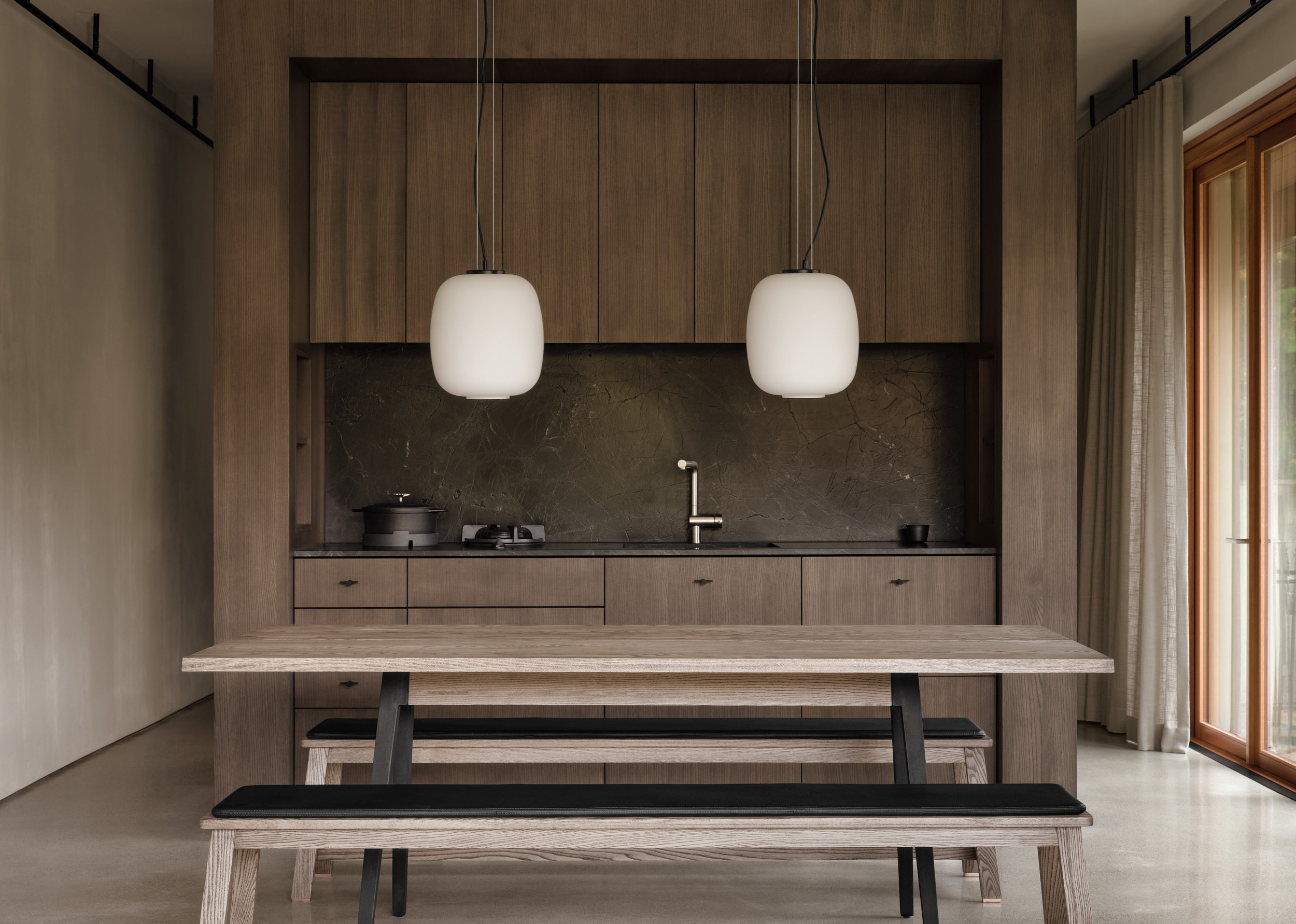
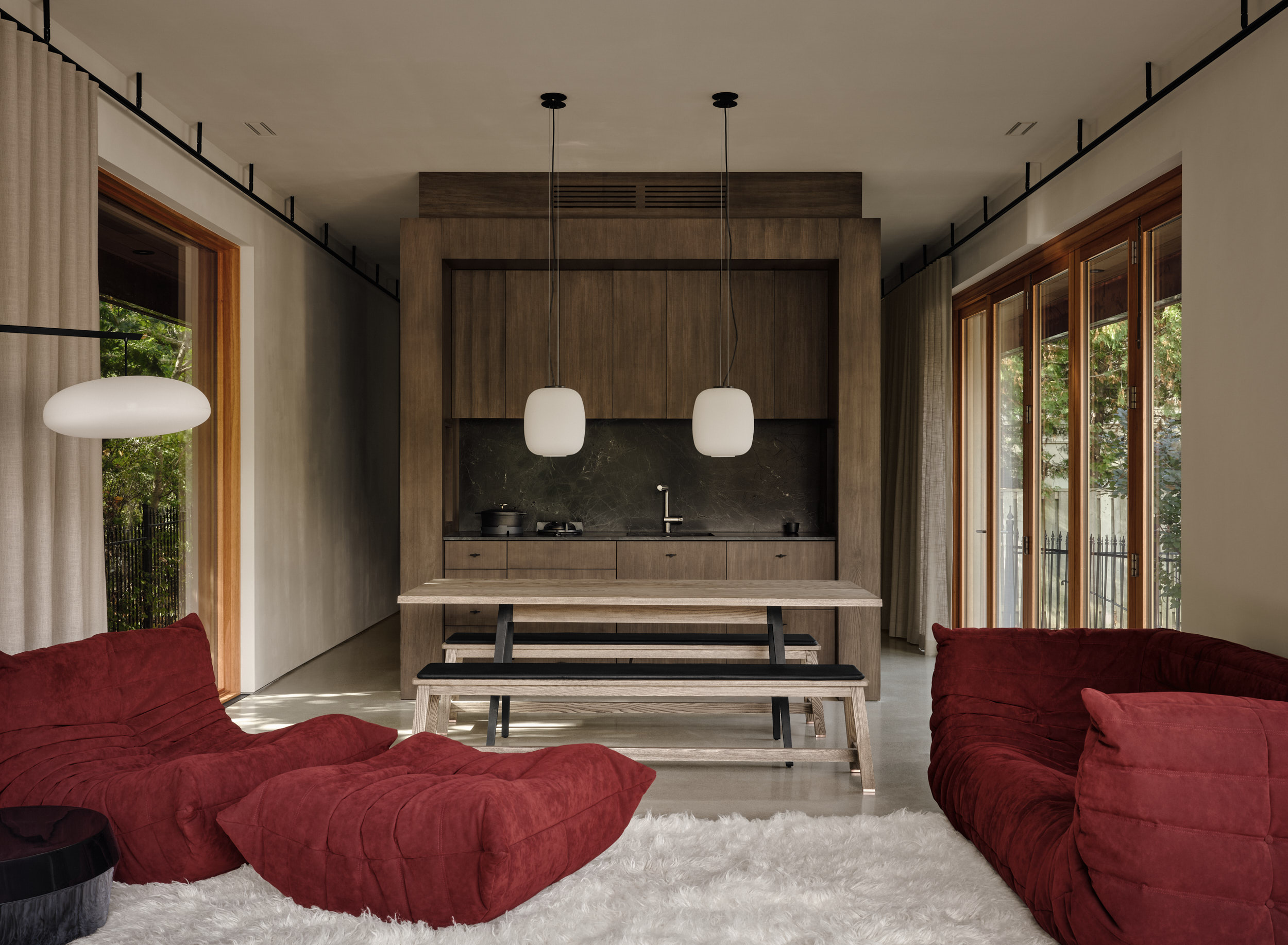
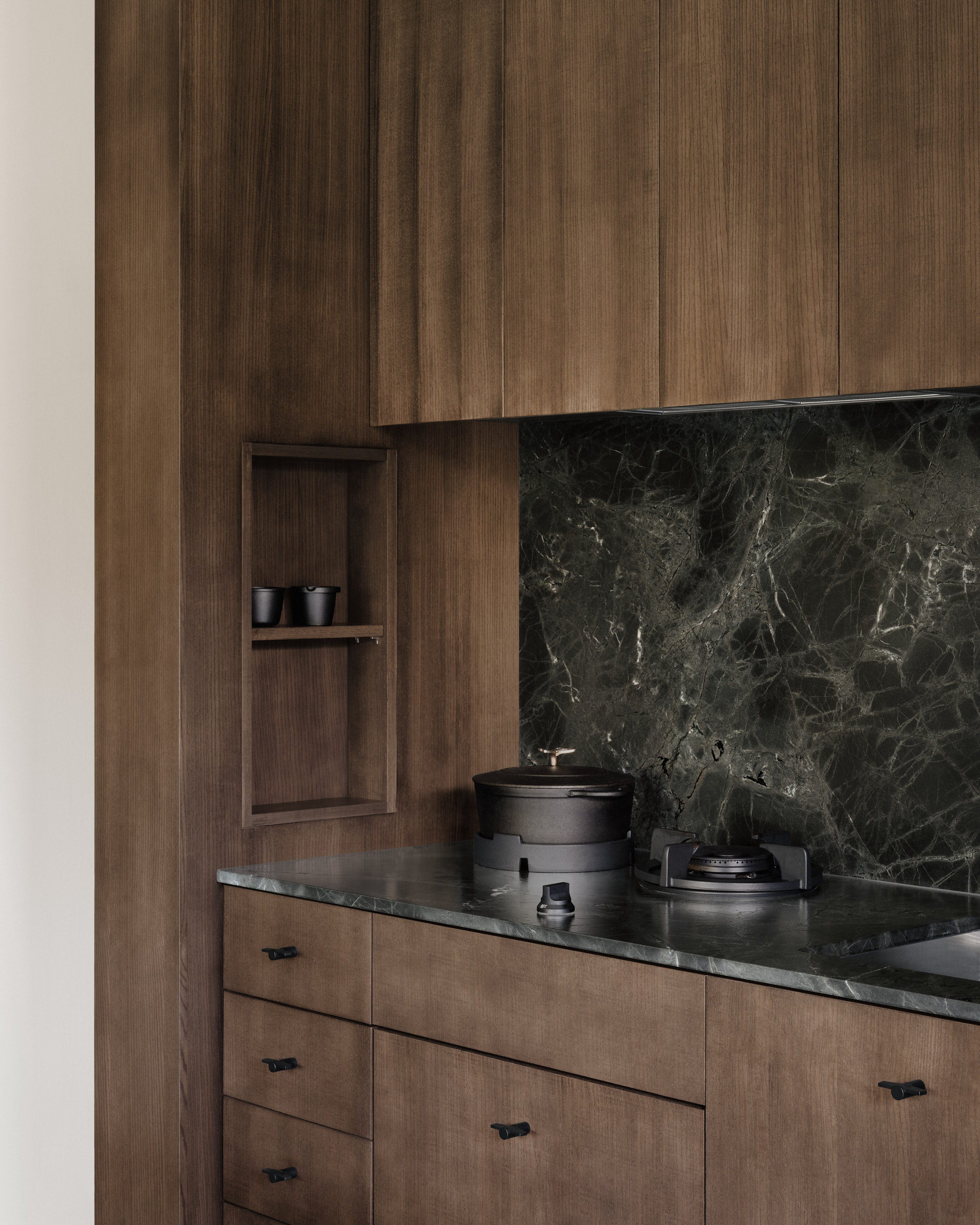
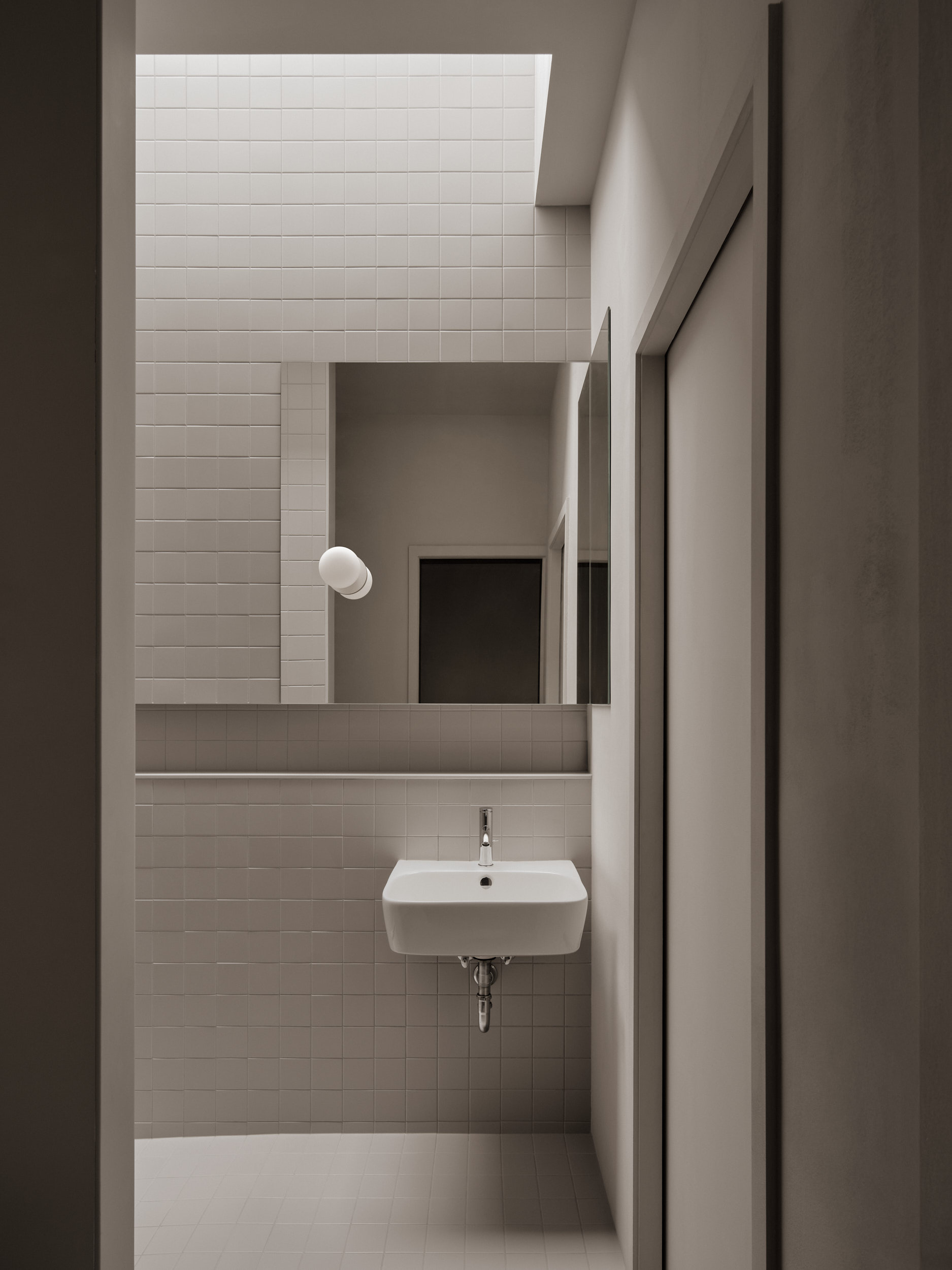
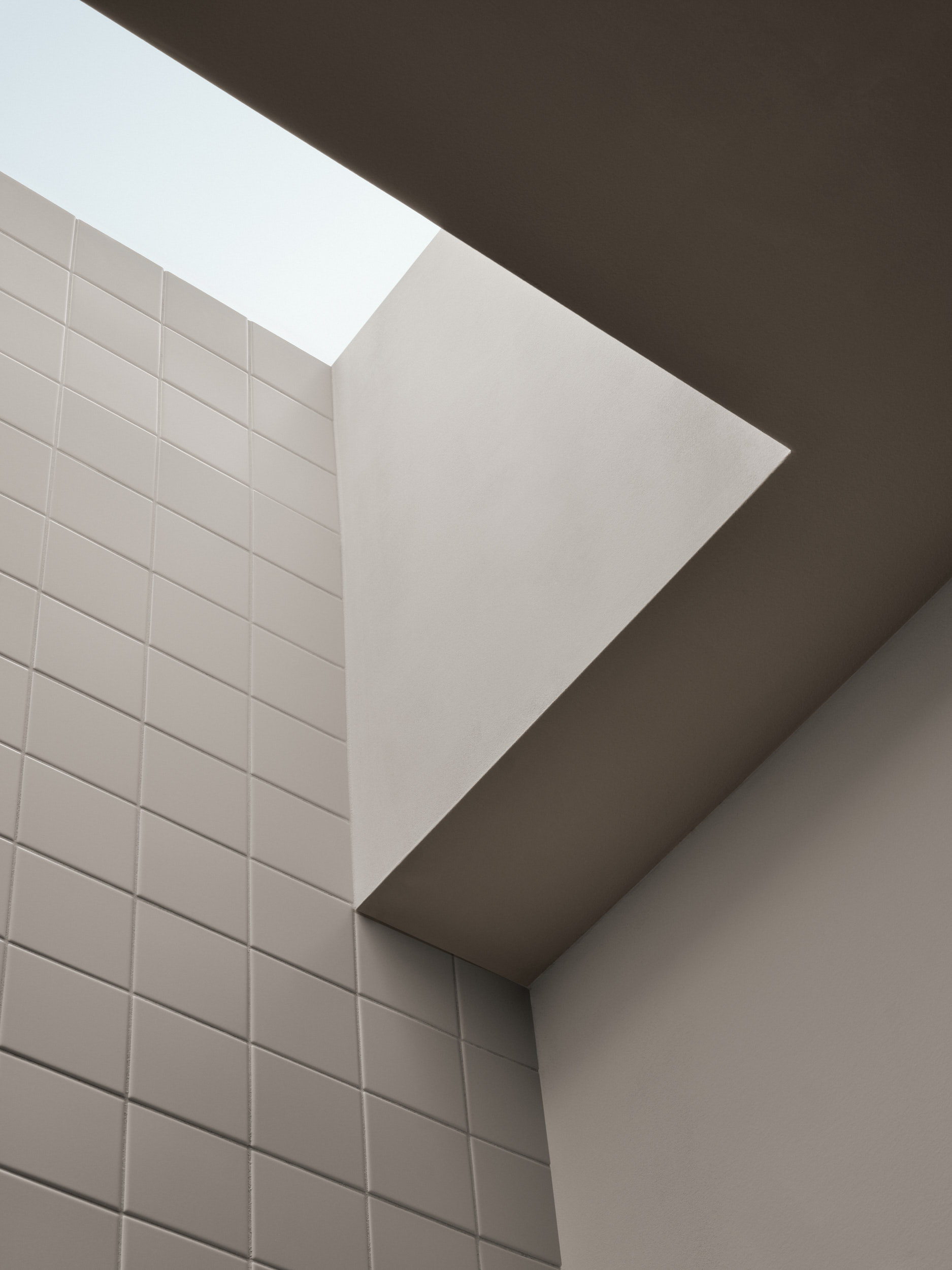
Inside, a single-storey plan is organized around a monolithic wooden core that holds all services — kitchen, bathroom, and storage. Living space lies on one side, the bedroom on the other. A narrow opening within the dark core reveals a luminous bathroom open to the trees above.
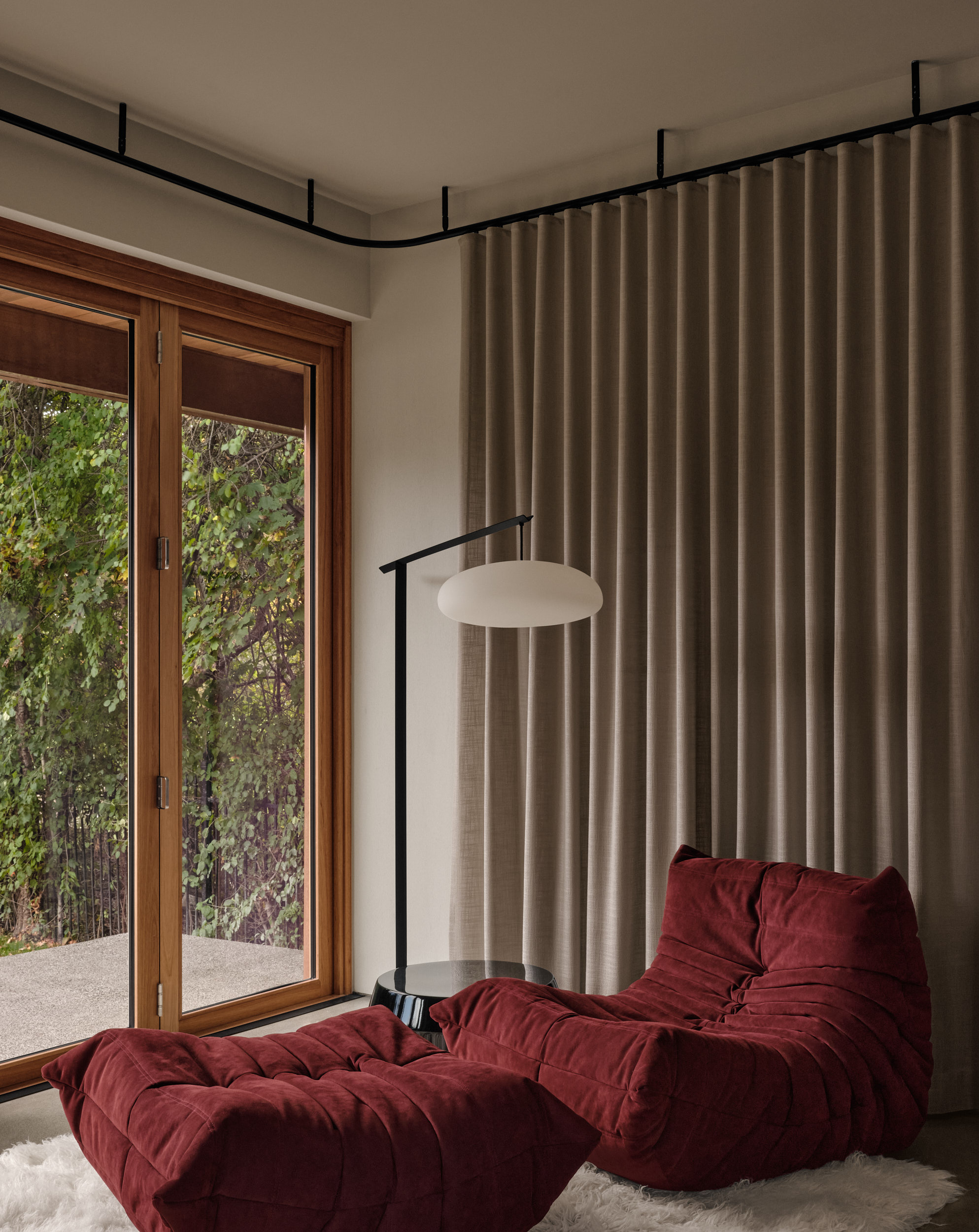
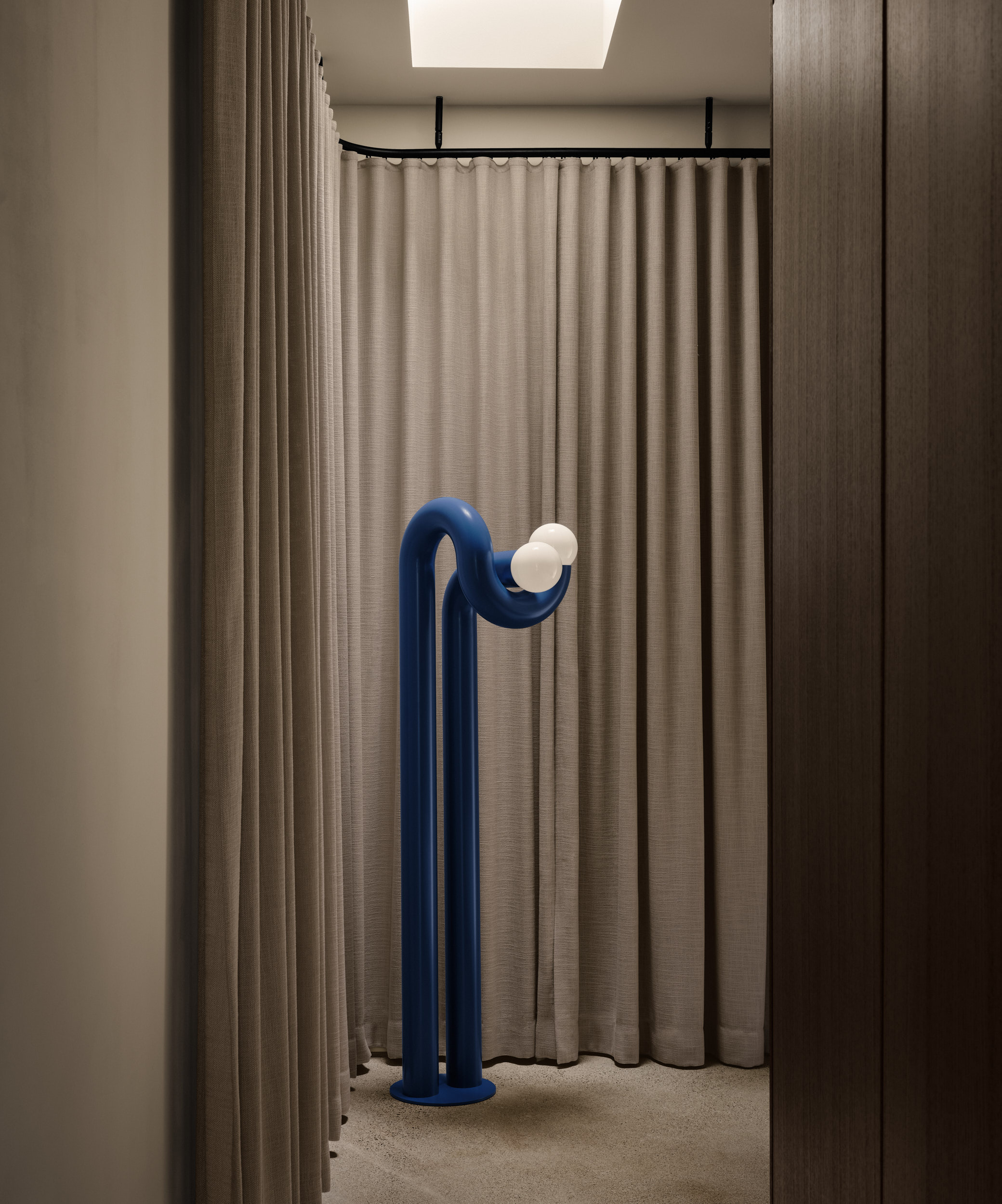
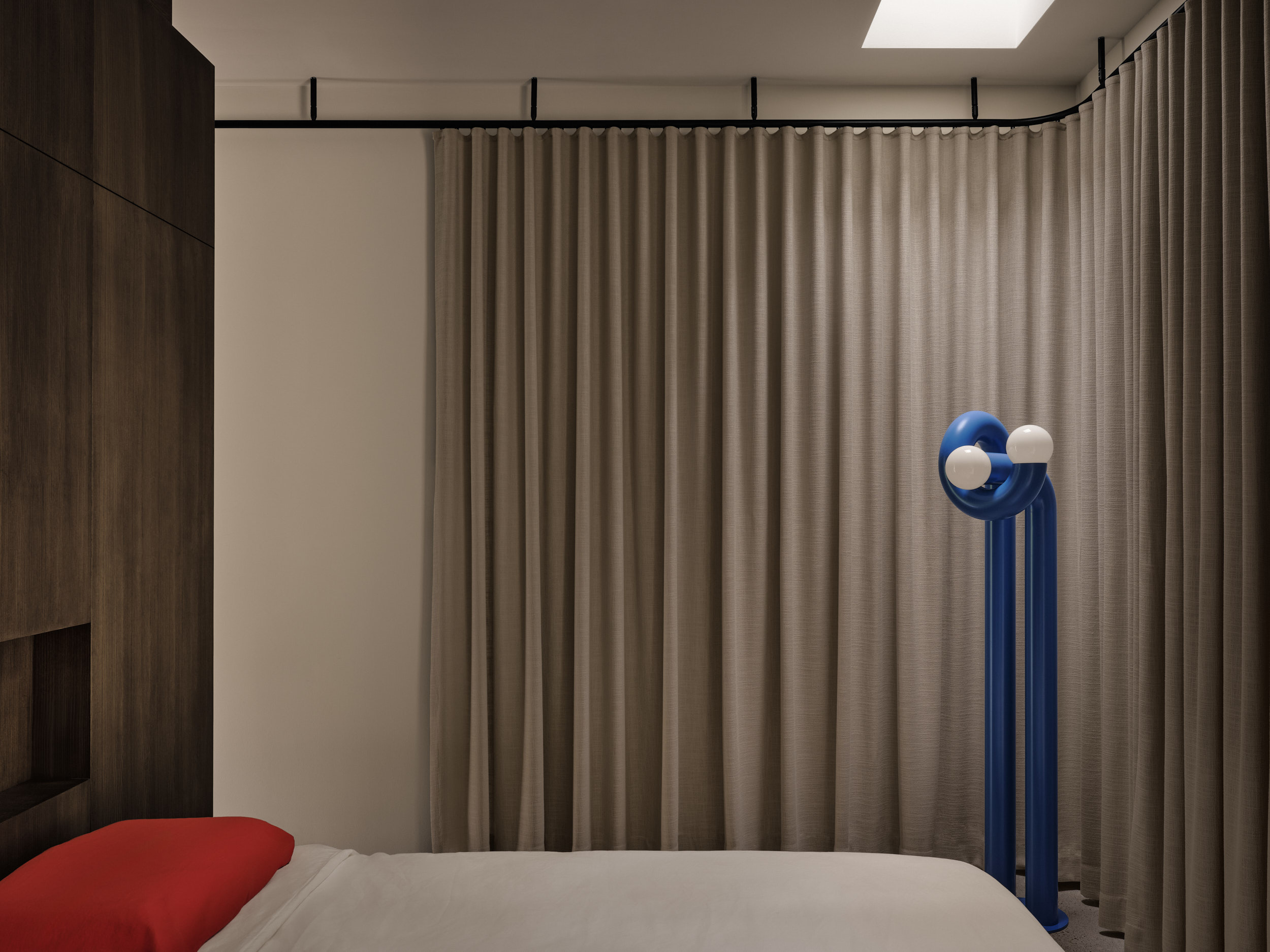
Subtle flexibility is embedded throughout. Continuous ceiling tracks allow curtains to shift, modulating privacy, light, and acoustics. Lightweight furnishings are easily reconfigured, while bi-folding doors stack outward beneath generous overhangs, enabling the living space to extend seamlessly into the garden when weather permits.
Copper House recedes quietly into its setting — a deliberate and modest structure that supports the landscape and the lives unfolding within it.